Cape Elizabeth Cottage
Private Residence. Completed at Barrett Made.
Historic Renovation & New Construction Addition
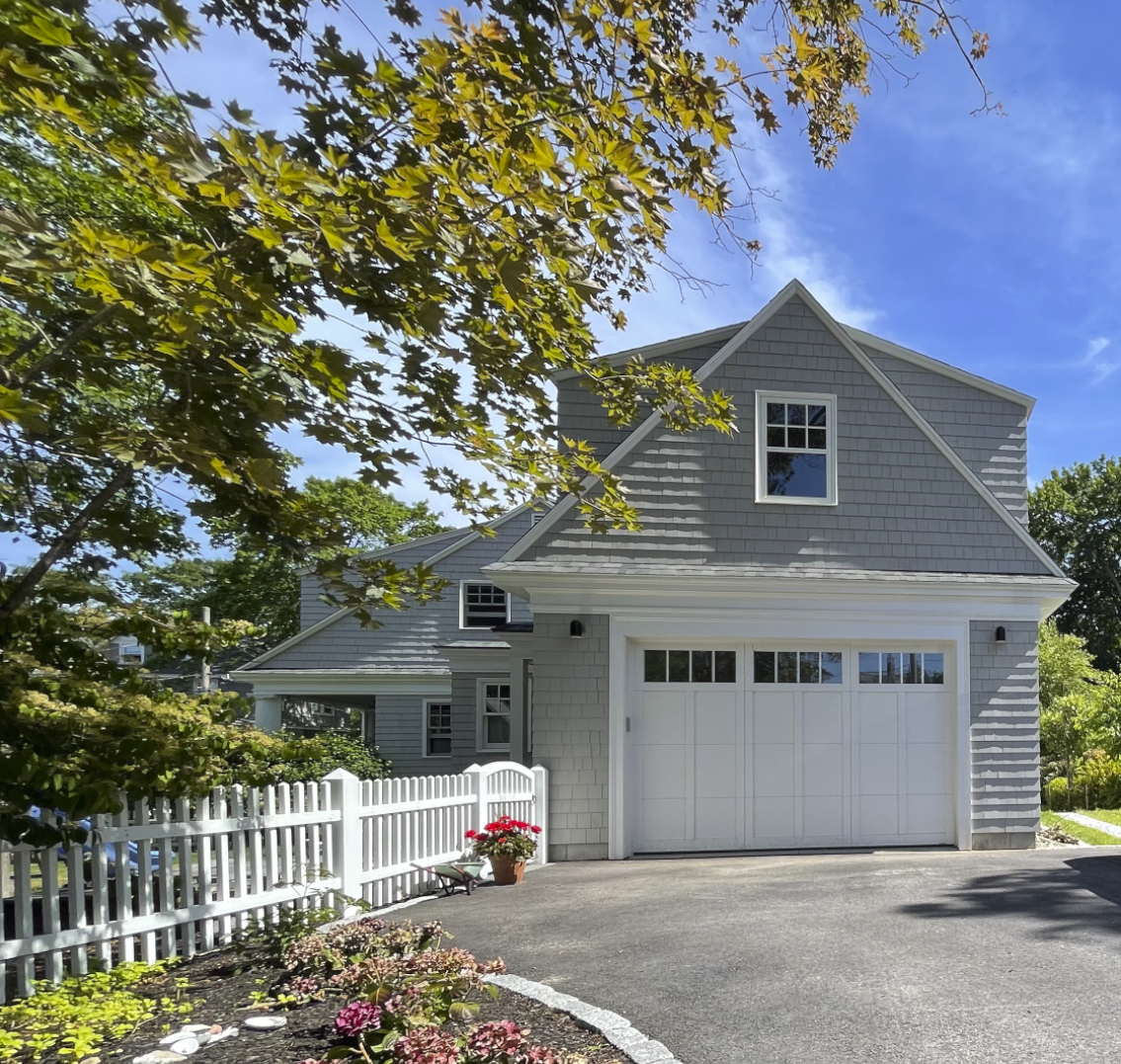
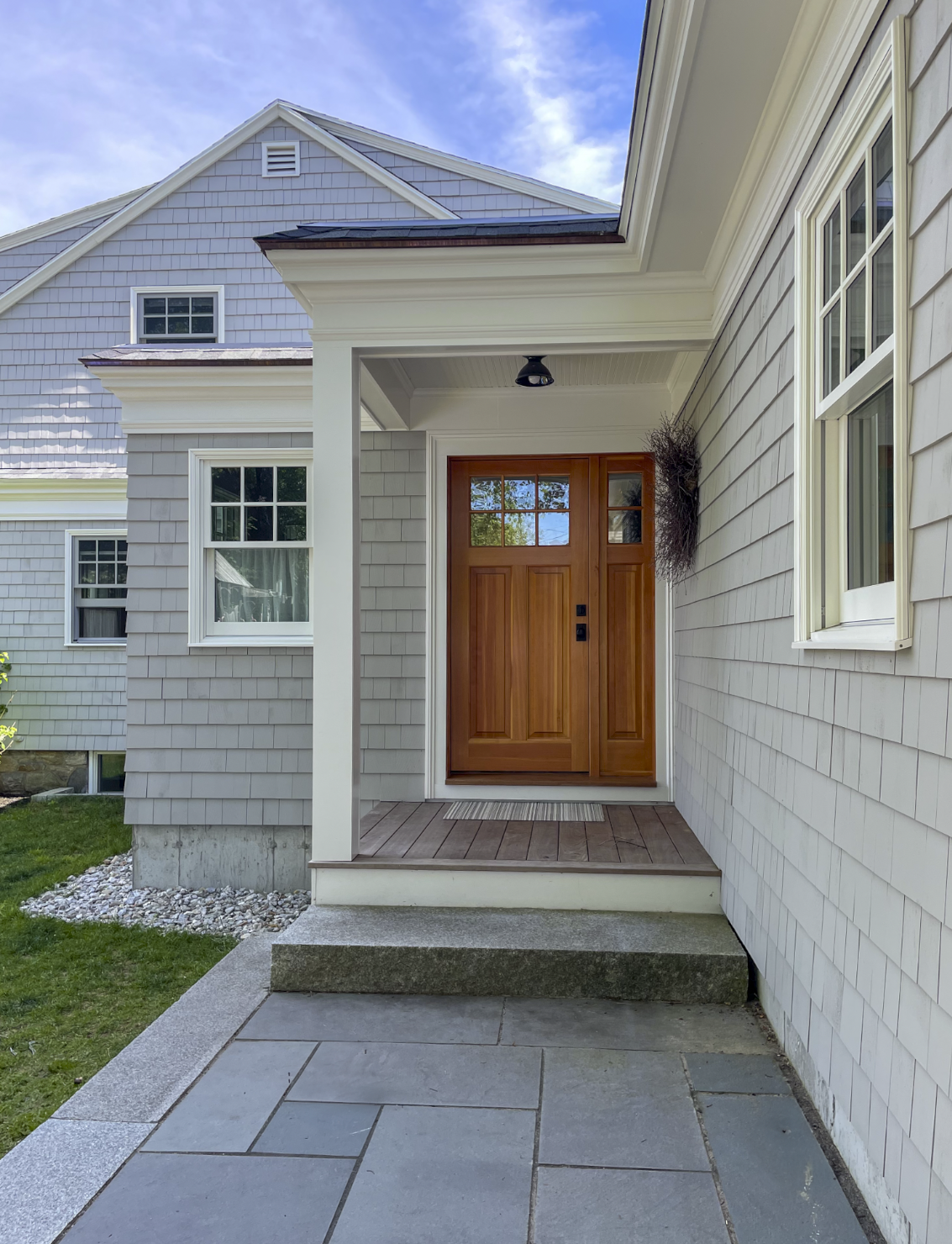
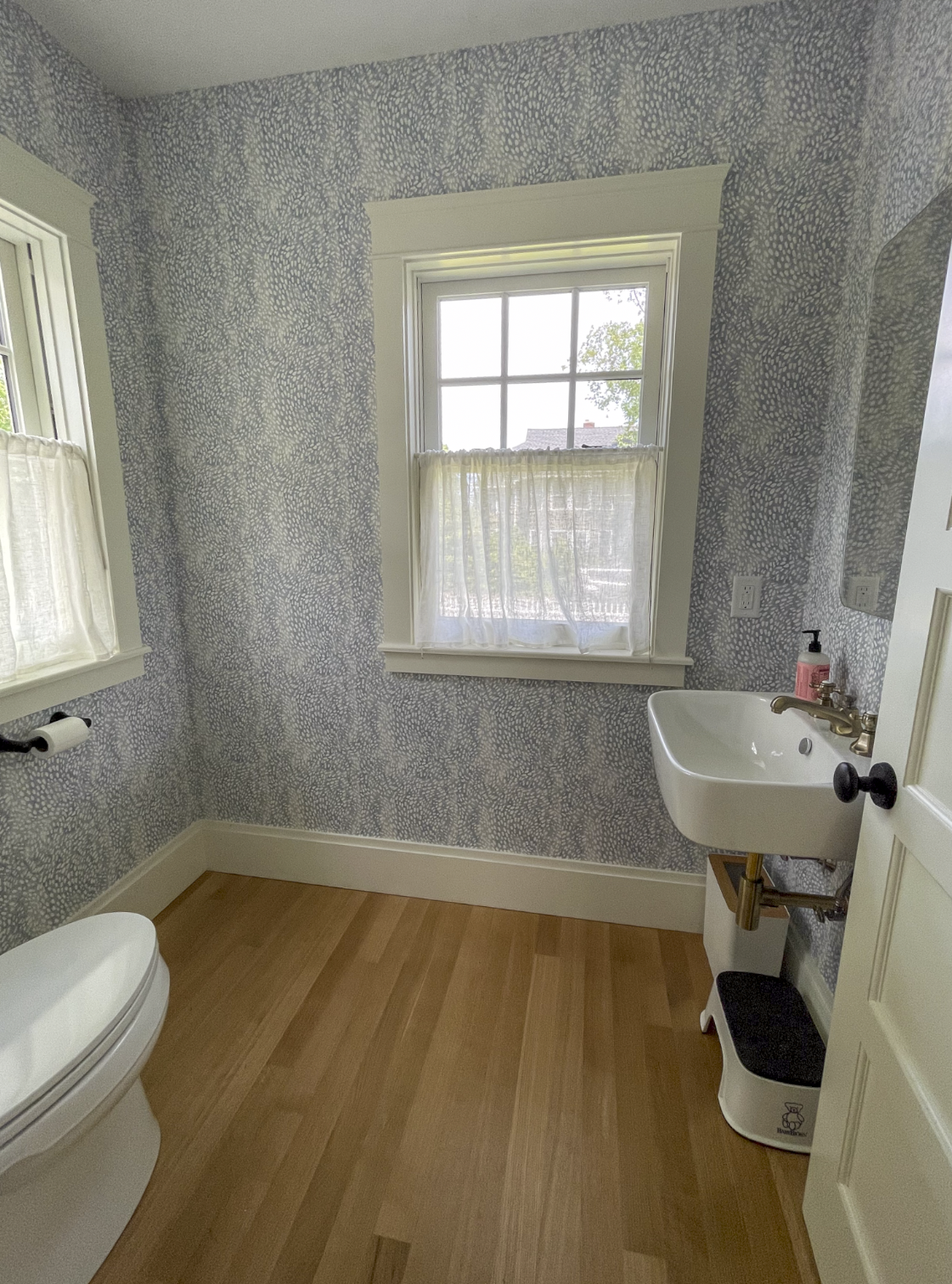
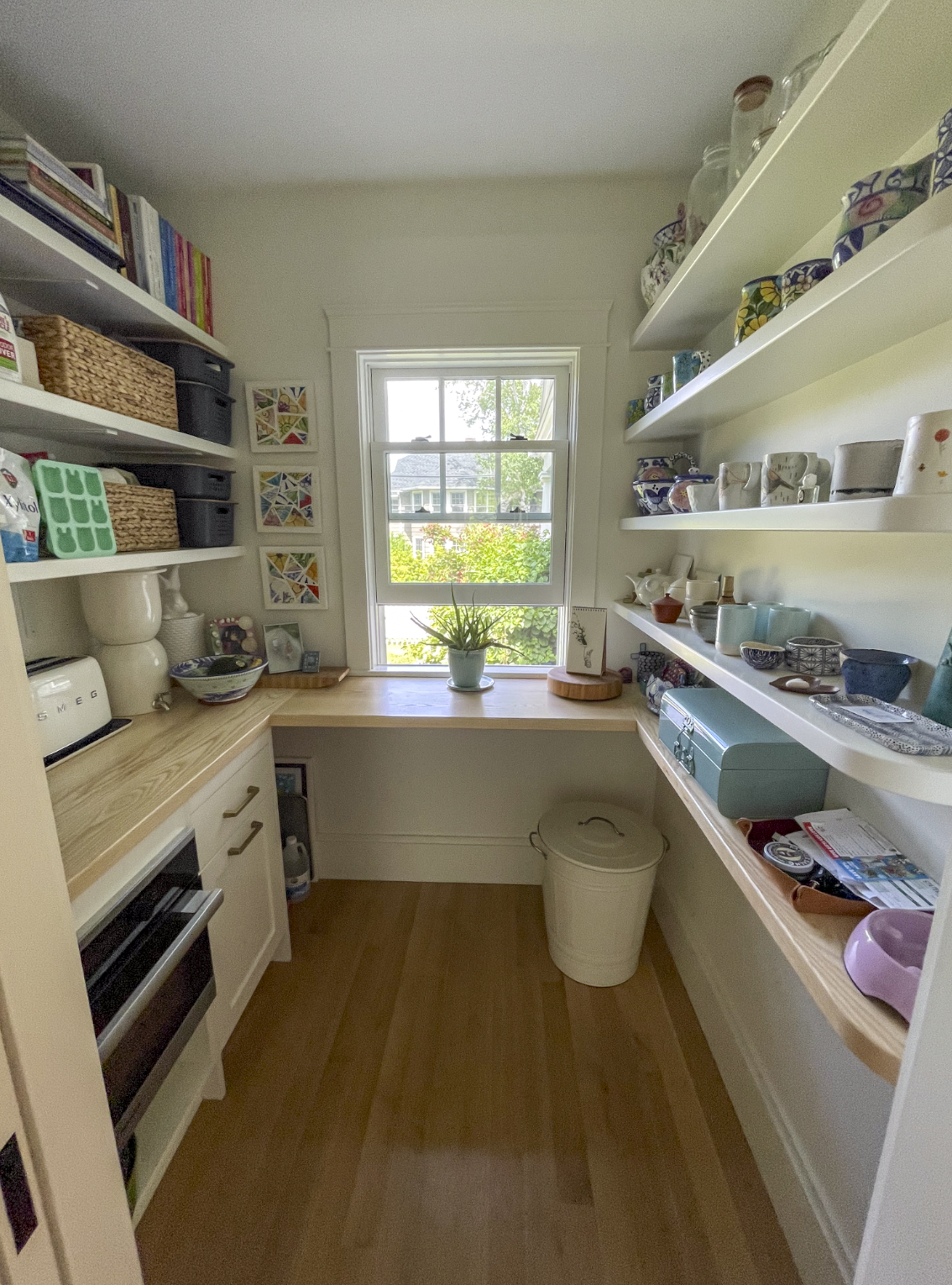
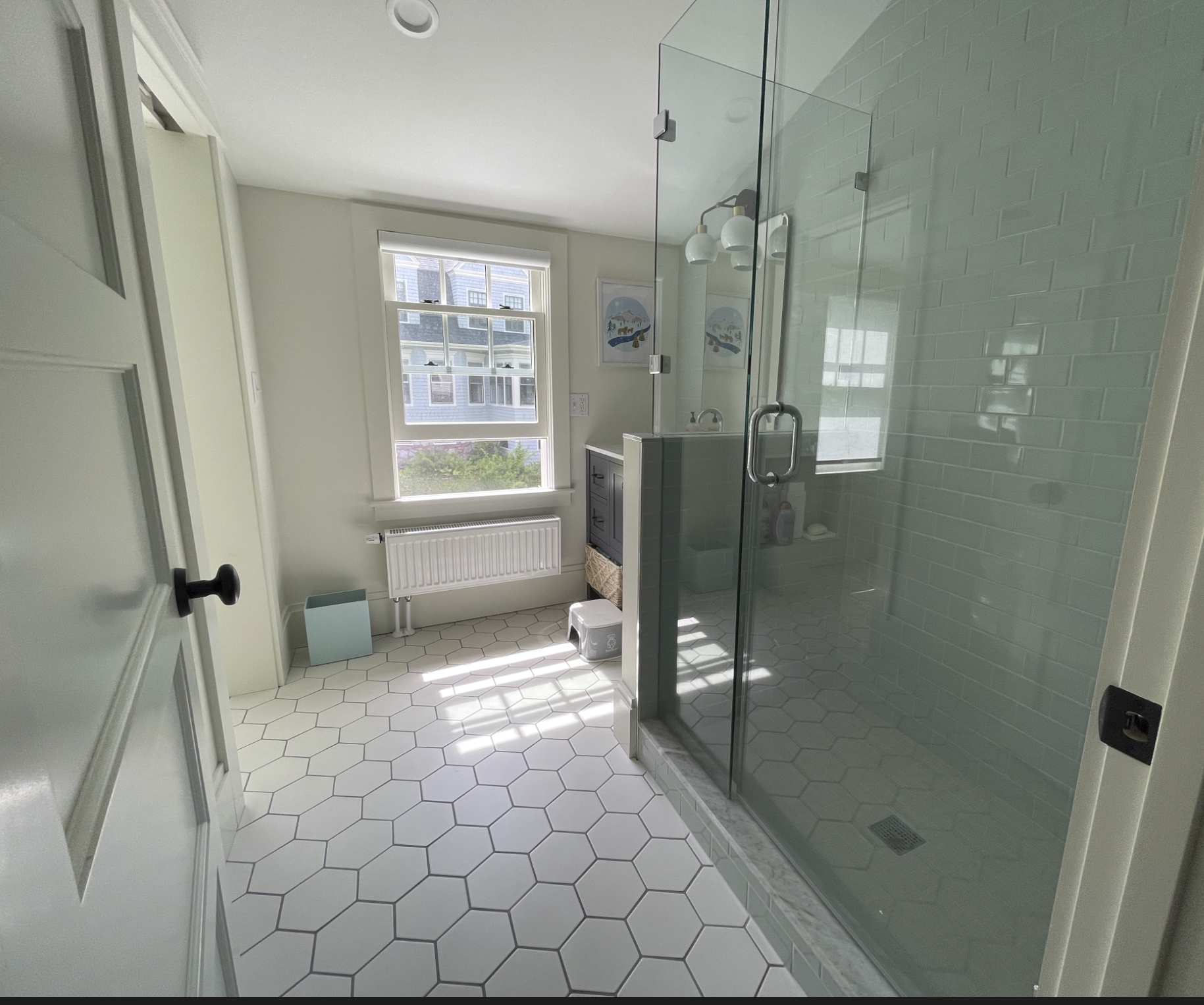
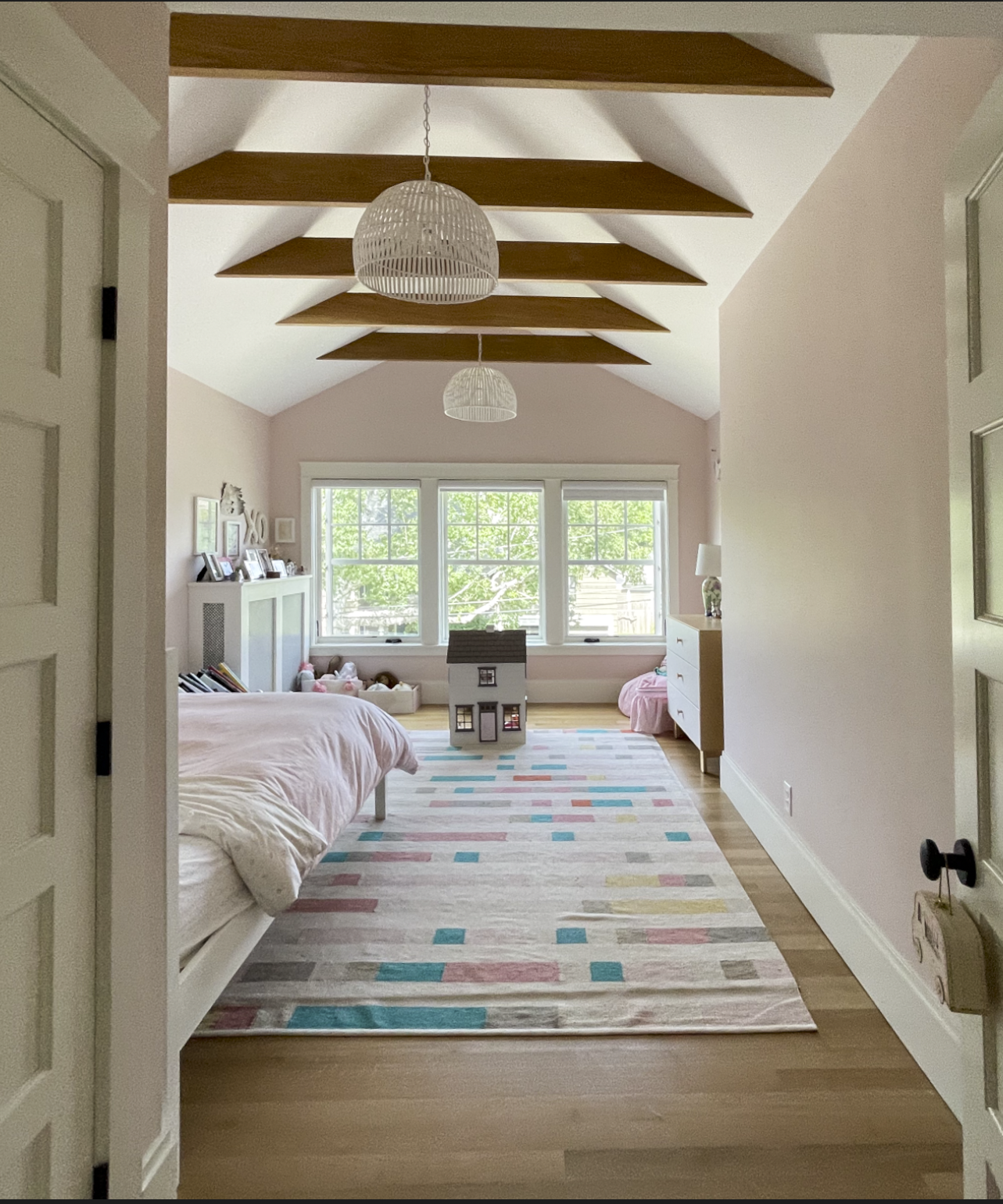
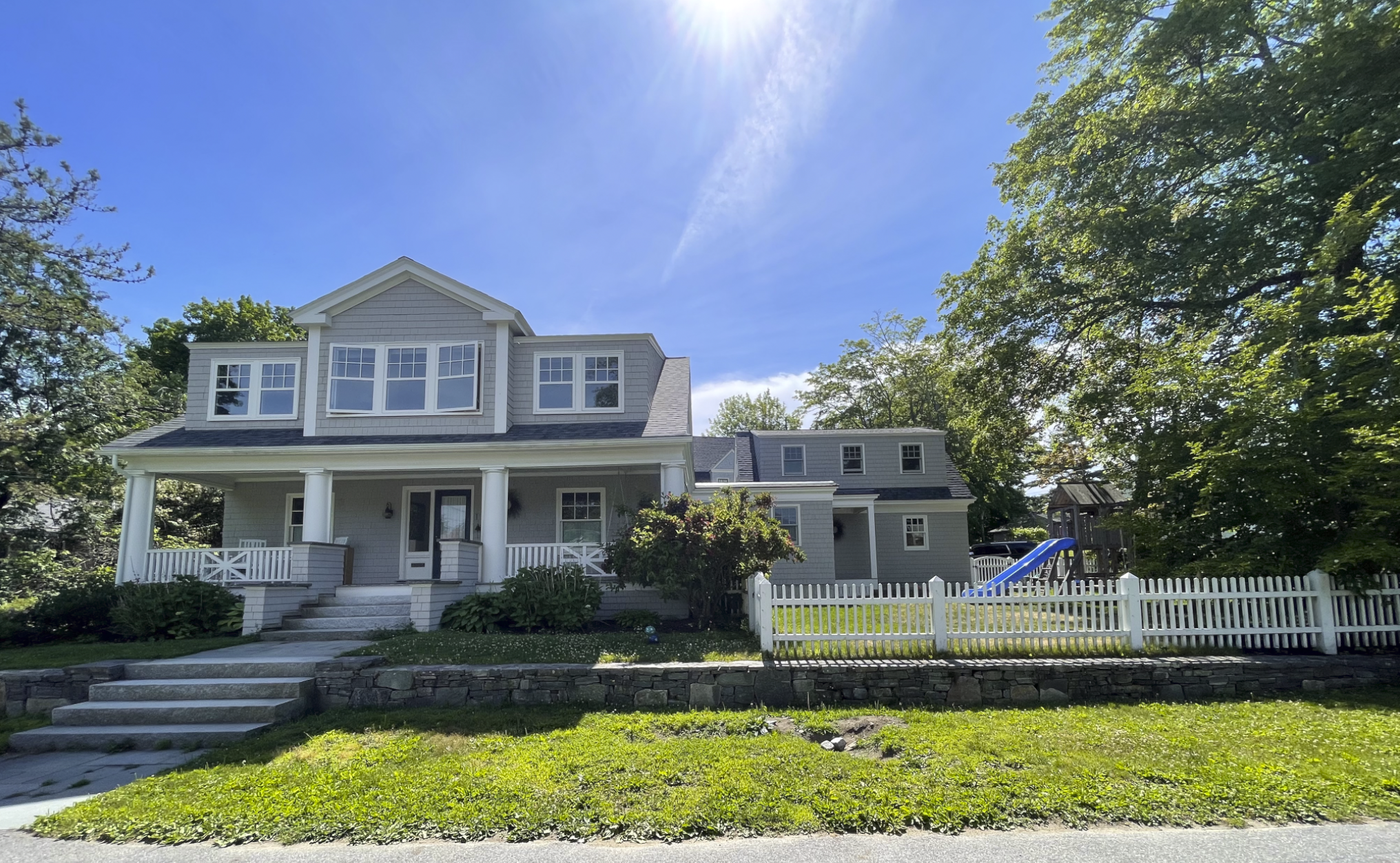
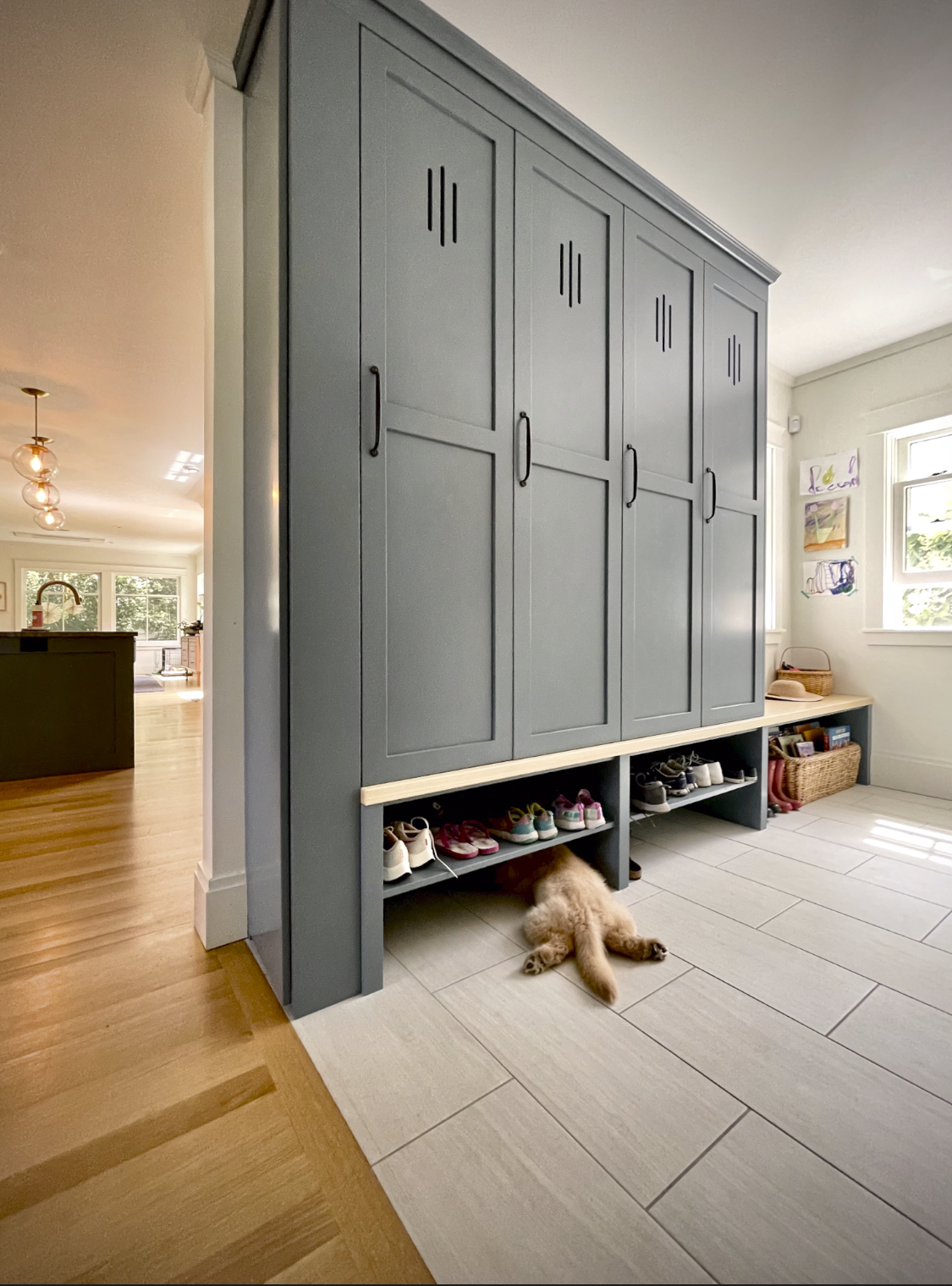
A historic renovation and two-story addition to a 1920s craftsman home in Cape Elizabeth, Maine, opening up the layout while respecting the original architecture. The main floor lacked a usable kitchen layout, adequate storage, and a properly sized mudroom. The home had also undergone numerous renovations that left noticeable, disjointed rooms and finish materials. The clients’ goals were to make the home more functional for their growing family, opening the first-floor rooms up to one another, add additional square footage/storage, increase energy efficiency, and create a two-story addition that housed a new mudroom, powder room, pantry, garage, and family-shared flex space on the second floor. The exterior design of the new construction portion of the home was inspired by the style of the original craftsman-style structure and the type of architecture in the neighborhood. Careful attention was made to continue the original home’s roof line trim, which was present on all four sides of the home’s exterior, onto the new addition portion of the project. The home is sited on a corner lot in a quaint neighborhood in Cape Elizabeth, which allowed the home to maintain its original formal entry on the front facade, while creating an everyday side of the home off the adjacent street, where a reimaged driveway, new garage, and new mudroom/main entry were created. The home is located on a postage-stamp-sized lot, and careful attention had to be paid to the size of the addition to stay within the Town’s building coverage requirements. The new design was able to work within the zoning requirements to maximize the footprint of the newly designed home, while opening up the main living area for a more spacious and light-filled living arrangement. The new addition was justified towards the backyard side of the lot to maintain an open yard space for the family’s kids to play.
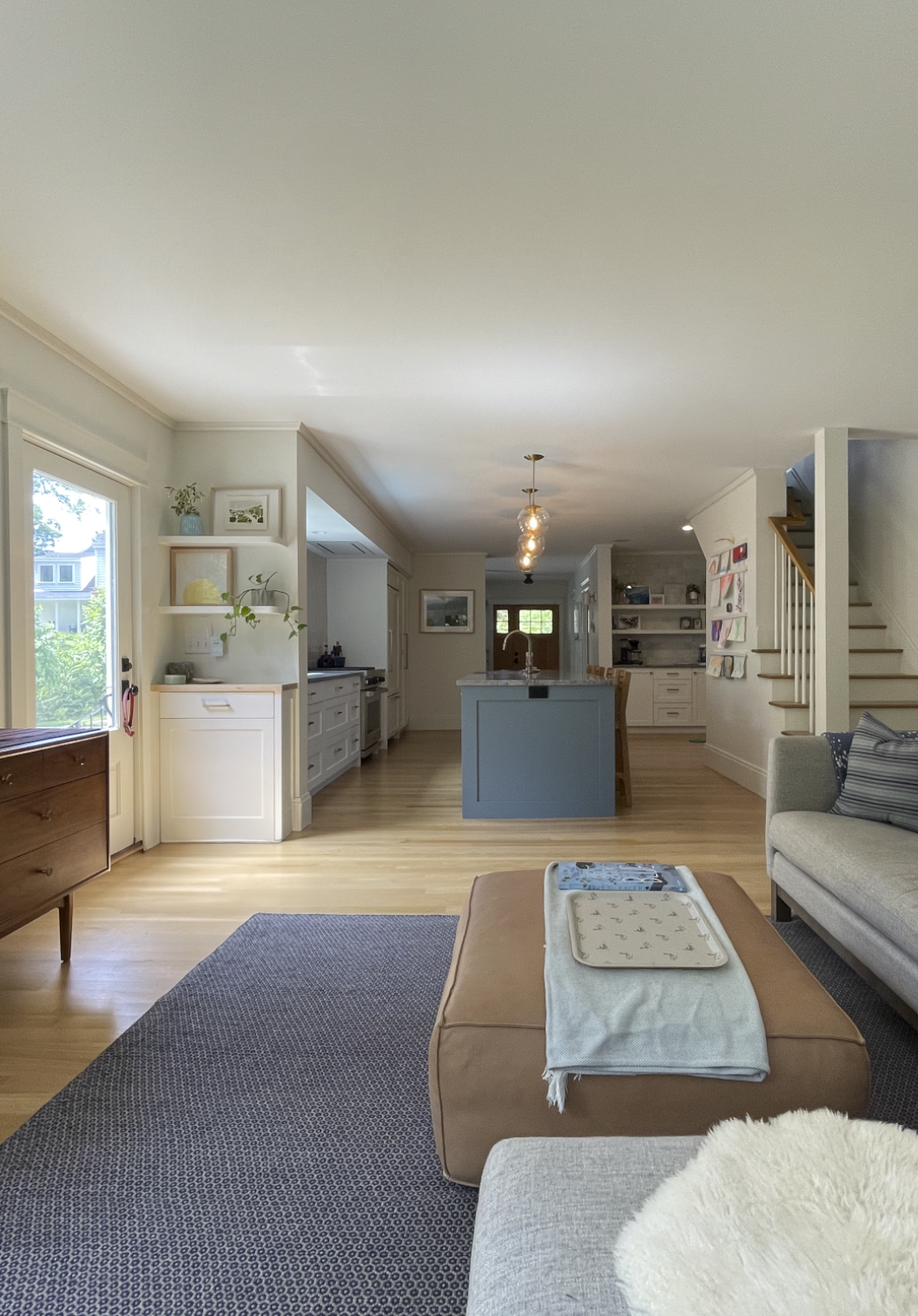
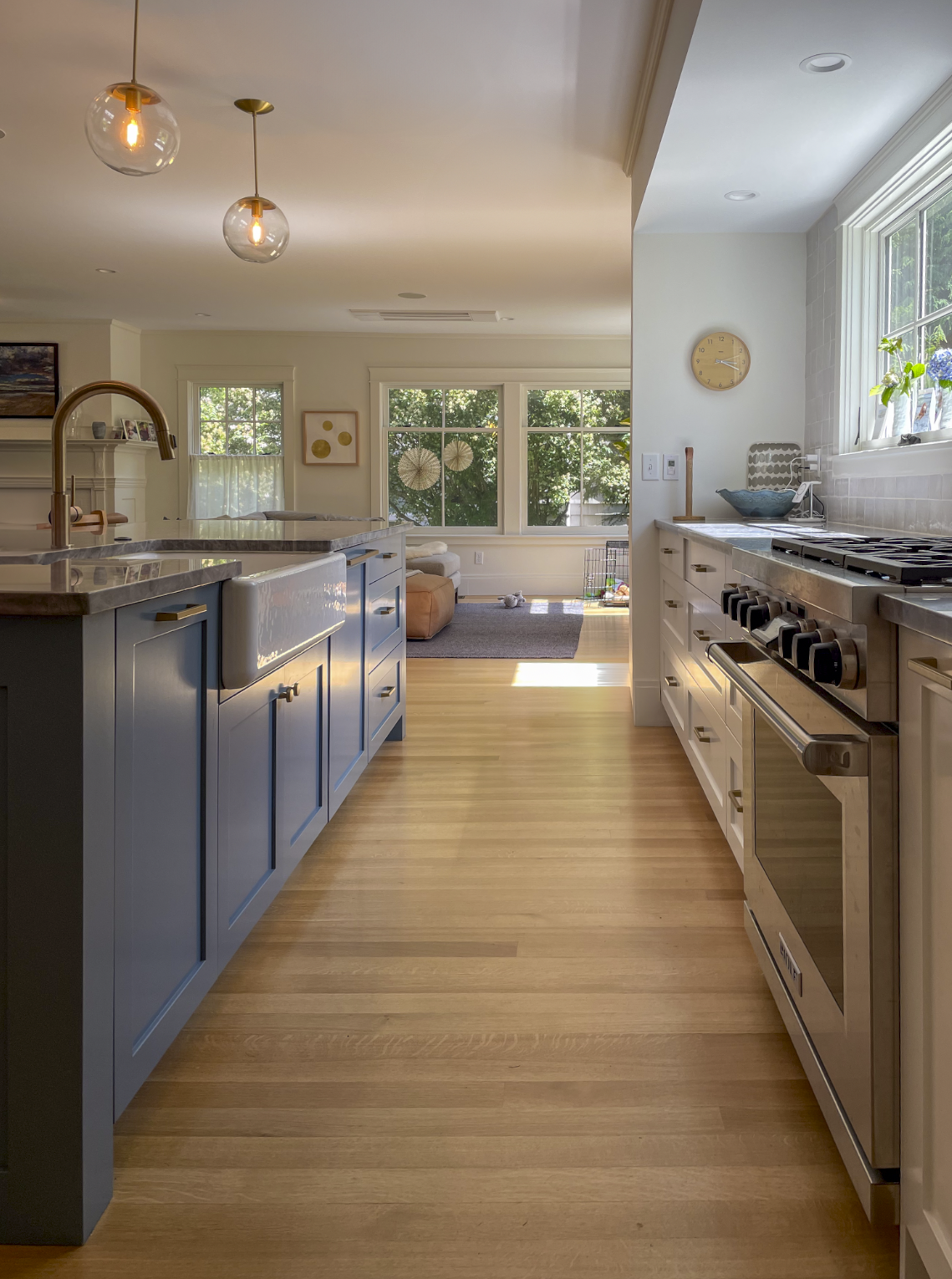
Numerous renovations left the home’s structural framing disjointed, with unresolved structural loads coming from second-floor dormers that were added at some point and were not original to the home. This resulted in a cobbled-together existing framing layout that effectively was using existing non-load-bearing walls that were not built to properly support the weight of the second floor and the roof. Being that the new design goals of the project were to open the first floor up as much as possible meant the new structural solutions needed to be designed in a way that the floor plan could be opened up and the unresolved structural roof loads from prior renovations could be secured. The project used a number of steel and engineered wood beams that were hidden in the existing second-floor cavity and carefully located structural posts to minimize the visual image of all the new structural work that was required. The result was an open floor plan that was able to blend the original interior layout with the interior space of the new addition to make for a massively improved layout with an emphasis on capturing natural light, and thoughtfully designed storage elements that tucks away everyday items but keeps them easily accessible. The home also modernized it’s heating/cooling by using several ceiling cassette heat pumps, new insulation in the original walls, and replaced the old single pane windows with new windows that matched the style of the original windows that were removed. Brian and the homeowner worked closely together on the interior finishes of the home to source clean and tasteful finishes that celebrated the owner’s clean and airy personal style, while being transitional enough to fit in with the historic style of the home. The interior design of the home uses warm whites, natural wood tones, and select pops of blue to create spaces that are both thoughtfully designed and family-friendly.